


The Universidad Central del Caribe (UCC) presents ArsMedicina, a scientific journal that offers a new publication space for scientists and students with the purpose of disseminating knowledge to the entire community.
Our mission
To offer an innovative space for exchanging new knowledge in basic, clinical, and behavioral sciences in an open-access format.
Our vision
To publish scientific papers and disseminate health information with the highest standards of quality, excellence and methodological rigor.
The journal values are:
For UCC, its faculty, students, and alumni, ArsMedicina represents another step forward in fulfilling our mission as an institution of higher education dedicated to training high-quality health professionals dedicated to meeting the needs of the community with a humanistic focus and a high sense of moral obligation. ArsMedicina is the new UCC scientific outreach tool.
We thank Dr. Jorge Lastra, founder of ArsMedicina, for his interest in UCC continuing his innovative project dedicated to science and education. His legacy will continue with us.
The Future of Healthcare: Artificial Intelligence’s Role in Biotech Advancements
by: Ivone G Bruno, PhD
by: Ivone G Bruno, PhD
Introduction: Drug development remains an expensive and risky venture. According to DiMasi et al. (2016, J Health Econ.), the estimated capitalized cost of developing a single new drug is over US $2.6 billion (DiMasi et al., 2016; J Health Econ.), A 2024 commentary in Nature Reviews Drug Discovery reported that bringing a new drug to market now costs around US $880 million, inclusive of failure rates and capitalization. The overall timeline to market of 10 to15 years and the large number of drug failures highlights the need for more efficient, data-based decision-making tools for drug development. As a result, drug development is an area where artificial intelligence (AI) and machine learning (ML) are now changing how new medicines are discovered, screened and developed.
“The main reasons why pharmaceutical companies and healthcare organizations are implementing ai/ml are to reduce time and cost of drug development and patient care”
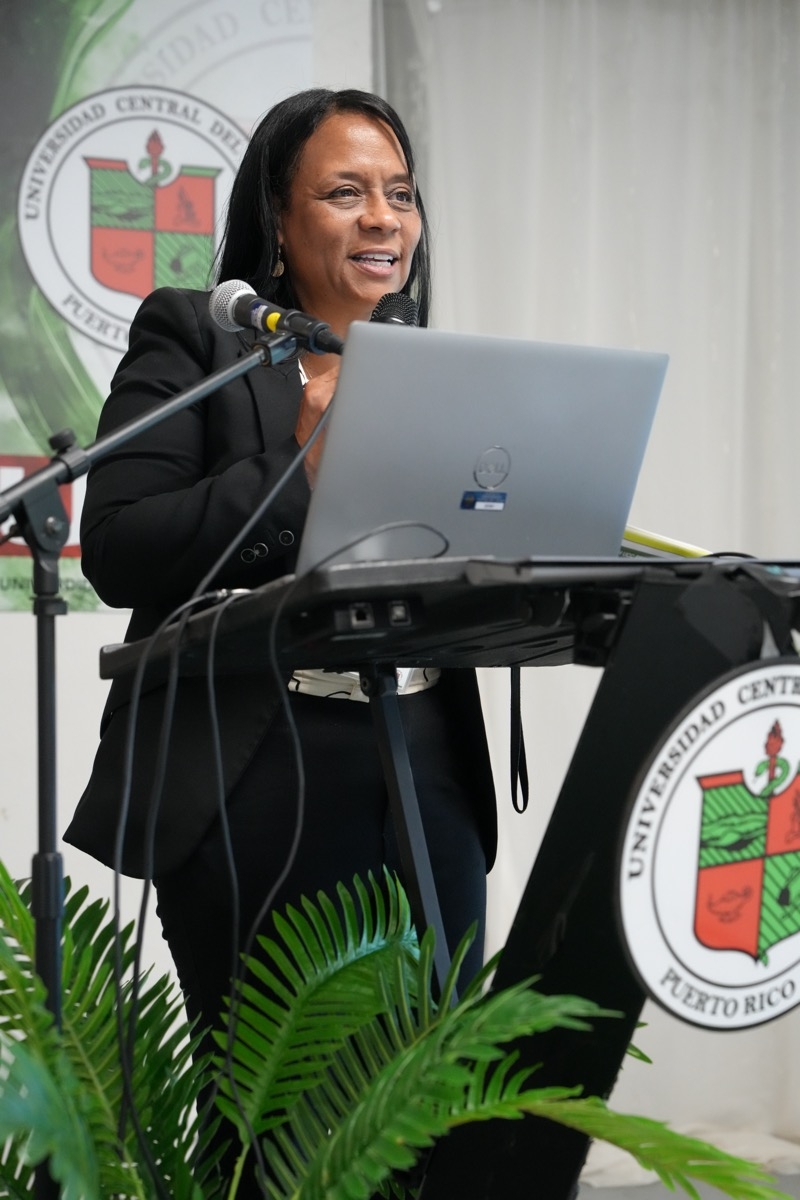
During the talk Dr. Bruno presented several examples of how AI/ML is reducing the cost and accelerating drug development. Below is the summary of the key mechanisms by which AI/ML is being adapted in drug development.
Improved target identification and prioritization: Machine‐learning models can integrate multi-omics (genomics, proteomics, metabolomics) plus network biological attributes to identify novel therapeutic targets and assess “druggability” more rapidly than traditional wet-lab‐first approaches. By better selecting targets with a higher likelihood of success, companies can reduce downstream failure, thereby saving the cost of wasted investments. An example of its applicability is seen in the global problem of antimicrobial resistance (AMR). Recently MIT researchers used a machine-learning algorithm to identify a drug called halicin that kills many strains of bacteria. Halicin effectively prevented the growth of antibiotic resistance E. coli, while the commonly used antibiotic ciprofloxacin failed to kill the antibiotic-resistant bacteria.
Virtual screening, de novo design, and lead optimization: AI/ML enable in-silico screening of very large chemical or biological libraries to predict binding affinity, toxicity profiles, and off-target risks early. Using these databases, generative models (e.g., variational autoencoders, generative adversarial networks) can design novel molecular structures with desired profiles, reduce empirical iteration, and propose realistic synthetic molecules and their required optimized manufacturing processes. This reduces the number of physical compounds synthesized and tested, directly lowering material and assay costs and shortening development and optimization efforts.
Predictive toxicity and safety screening: AI‐based models can flag potential toxicity issues earlier in the pipeline (preclinical), enabling the predictivity of preclinical models, minimizing the risk of failure in first‐in-human / Phase I/II.
Clinical Trial Design and Operations: AI/ML are applied to site selection, patient recruitment, monitoring, adaptive trial design, and synthetic control arms. AI-driven analytics can improve patient selection, trial design, and real-time monitoring. Yang et al. 2020, demonstrated that ML-based patient stratification models reduce the sample size required to achieve statistical power, cutting clinical trial costs. Is it evident that the integration of real-world data via AI/ML supports better patient phenotyping, endpoint prediction, and operational decision making, that can be critical in reaching a significant therapeutic benefit and consequently lead to a higher probability of success. In addition, administrative and operational aspects of clinical studies such as data cleaning, query resolution, protocol drafting, can reduce time and operational cost.
Summary: AI/ML integration marks a paradigm shift from reactive, empirical R&D toward predictive, data integrating and hypothesis-driven drug discovery. Its success depends on data quality, model interpretability, and regulatory acceptance. All of which are now rapidly evolving through collaborations among academia, biotech, and regulatory agencies and will continue to revolutionize drug development and medicine.
Submitted Abstracts
Influence on the Activation State of Monocytes from HIV-negative Men Exposed to Plasma Exosomes from ART-treated HIV-positive Men in the Presence or Absence of Cytochalasin D
Bryan J. Collazo-Rodríguez, PhD Natasha N. Alcalá-Molina, BS Lorivette Ortiz-Valentín, BS Yisel M. Cantres-Rosario, PhD Elaine Rodríguez, MT Janaina Alves, PhD Valerie Wojna, MD Yamil Gerena, PhD Department of Pharmacology and [...]
Addressing Food Insecurity in the Underserved Population of Old San Juan, Puerto Rico Through Clínicas Padre Venard’s Outreach
Carolina Ganan Mejía Jasmine Contreras Santini Naishaliz Lorenzo González Alondra Soto-González Gabriel Camareno Soto Universidad Central del Caribe, Bayamón, Puerto Rico Introduction At Clínicas Padre Venard, addressing food insecurity and providing [...]
Identifying Delayed Diagnosis of Huntington’s Disease (HD) in Medical Practice in Puerto Rico
Valeria A. Gerena-González Jan C. Urbán Arroyo Carlos J. Román-Santiago Neishmaydi Negrón-Zeda Zoe Cruz-Gi Sylvette Ayala-Peña Universidad Central del Caribe, School of Medicine Fundación Huntington Puerto Rico University of Puerto Rico, [...]
Social Determinants of Health in Underserved Populations at a Free Clinic in Old San Juan
Alondra Soto-González Lizandra Domínguez-Orona Valeria Cordero Berríos Isabel Falcón Asencio Gabriela Cañizares Díaz Heidy Rivera Santa Eduardo Pérez Delgado Gabriel Camareno-Soto Universidad Central del Caribe, Bayamón, Puerto Rico University of Puerto [...]
